
Podcast
AIM podcast: Scaling health care innovation
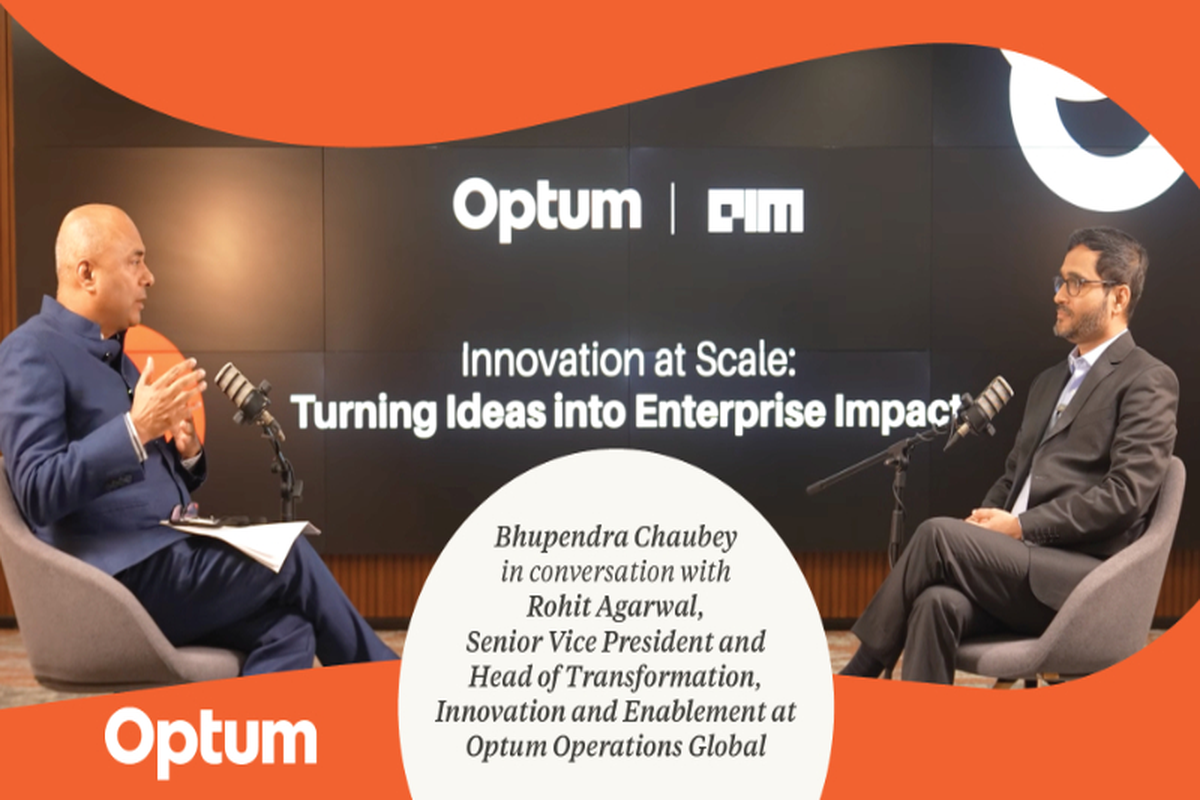
From pilots to impact: Rohit Agarwal of Optum India joins Bhupender Chaubey on the AIM podcast to decode innovation at scale in health care.
31 March 2026 | 4-minute read and 24-minute watch
Scaling innovation with empathy and intent
At Optum, innovation is not about isolated breakthroughs — it’s about creating impact at scale that improves real health care experiences.
In this episode of the Analytics India Magazine (AIM) podcast, Rohit Agarwal, SVP and Head of Transformation, Innovation and Enablement at Optum India, joins veteran journalist Bhupender Chaubey to unpack what it truly takes to move ideas from pilots to enterprise-wide adoption.
The conversation explores how healthcare innovation must be grounded in empathy, focusing on simplifying care journeys and making them more personal for those at the center.
From pilots to platforms
Rohit shares how Optum approaches innovation as a system — combining frontline insights, rapid prototyping and a platform mindset to scale responsibly. AI, cloud and automation play a critical role, but only when embedded thoughtfully into real-world workflows.
The discussion highlights a shift from reactive sick care to proactive, connected experiences, where technology, people and processes come together to make health care simpler, more human and more impactful.
There’s this big global conflict these days: human welfare and the impact of AI.
Innovation, for me, is not a shiny object. Innovation for the sake of innovation is never going to work.
There cannot be a replacement. “Innovate” will never become a robot unless the person at the center requires a robot.
Host: Hello and welcome to this special conversation. My guest today is Rohit Agarwal, Senior Vice President and Head of Transformation, Innovation, and Enablement at Optum Global. Rohit, thank you—great to have you here.
Host: It’s a pretty long designation—innovation, transformation. Help me understand: how do you look at the word “innovation,” and how does it lead to transformation?
Rohit: It’s a long phrase because we’ve tried to use words that people can relate to and be a part of the culture we’re trying to drive. Innovation, for me, is not a shiny object or one big thing that happens overnight. It’s about making persistent changes step by step—it’s a journey. It’s challenging the status quo and converting that into actions, then pulling it through to the value we’re able to generate.
Um so you think about innovation, it could be, you know, from small ideas, uh you know, incremental changes that you need to do on a day-to-day basis that get you to somewhere. it improves the work that somebody does or it you know helps improve uh you know just a little bit of an experience or big massive changes that can happen uh that really transform the way you do things you know you create new solutions you create new products so innovation is a mix of both the small and the big and I think that is why you know it's so important u you know so I'm part of a healthcare company you know and for me when you think about innovation it translates into the changes that you're making in the lives of the people that we are privileged to serve, right? I mean, uh, how do we make sure that healthcare becomes better for everyone that we serve.
Um, you know, we were speaking earlier about data, right? I think one of the things that we need to understand is that u behind the data, behind the work that we do, there is a human.
Behind every claim, there's a human being. Behind every call, there's a human being.
So, for me, when I think about innovation, it's not about, you know, process maps. It's not about the tools, but it's about the humans that we serve. It's a good phrase, you know, about the humans that we serve. So, let me just delve a little deeper into this with you. Uh your company primarily caters to the to the American markets.
So, let's say the human lives, how does optimum cater to a human life?
Yeah. So, I think um the purpose of our company is to make sure that you know we making the health system work better for everyone, right?
Um so why does anybody you know take insurance? uh they're doing that to make sure that they're able to um not have a financial burden when they go through some episode in their lives, right? And what we try to do at Optum is making sure that we are able to leverage data and I'll give you some example, right? Data from variables, right? you wear Apple watches, pull in that data. You pull in data from social determinants of health.
Uh you pull in data from your electronic health records, you know, past visits, uh your entire medical history. And then you're able to identify population that can potentially be at risk and then you able to really proactively reach out to them and prevent issues from happening.
Right?
So it's like an end to end solution that you provide. It's an end to- end solution which is you know thinking about uh the whole health care of a person.
Uh it's trying to prevent issues. It's if the issues happen it's trying to make sure that the quality of care that we deliver is of utmost quality is affordable and creates an experience for the members that we serve. So and and is there like an age barrier or age threshold where you start I mean from the time let's say a child is born right till the time let's say life expectancy 75 80 like I'll give you the Indian context right I mean India it's difficult to get a health insurance for a senior citizen right I mean in these spaces what kind of solutions does a company like yours really offer so in the so the Indian healthcare system and the US healthcare system are very different right and I think in the US healthcare system uh the system is One very robust.
The good part is you know this is not restricted to any urban setting. Uh it you know it reaches out to both urban as well as rural setting.
So that is why to your question it's an end to end coverage of the US healthcare population.
A short while back you said that one of the principal ideals for you in your definition of innovation is challenge the status quo.
Help me understand this. How does someone like you with your experience?
You've done over 11 years at this company now. You have rich experience in the field. How do you challenge the status quo in your process of innovation?
Yeah. No, so great question, right? So, um, see, for us, uh, innovation isn't about a team. Uh, it's not just my team that is, uh, driving innovation. It's a system. It's a way of thinking. It's a culture. Uh, and you know, we are very very conscious about that and we've got various programs and initiatives that drive that. Right? So, our innovation framework and program is called innovate. Uh, it's a play on words. The weight you know the last part is the number eight which has got eight pillars of that entire framework but what it does is it it's able to pull in insights from our frontline employees from our leaders it's able to couple that with technology with data it's able to align all of those issues with priorities and create solutions that are scalable and well as you know ones that are reliable over a period of time sustainable over a period of time so that's one thing that we do for us like I said culture is very important Um so when you think about culture we've got programs where we are um asking the frontline employees to come up with the ideas and that is very critical example.
Yeah.
How does it play out in real life?
Yeah. So we've got a program called bright ideas right where you know any associate any frontline employee that'slet's say processing claims but they're the people that are have the best view of our workflows. They are the people that have the best view of the experience of the members and providers. So they come up with their ideas. They share them with their managers. What we've done is we've created an environment where people have that psychological safety that you know even if I'm a frontline employee it's okay for me to share an idea to make things better. That idea may not be an idea that may get implemented but I feel comfortable in really driving that idea and coming up with that idea. So we've created those platforms where people can give those ideas and then we support them through mentorship through guidance through technology so that that idea can get implemented.
You know I'm thinking about what you're saying and what really comes to my mind is that maybe companies or entities who believe in scalability.
Would I be wrong if I was to say that the first step towards scalability is a psychological safety that you speak about? If there's no psychological safety of employees, how are you going to scale up?
No. No. Absolutely.
Would that be the right way to look at it?
No, it's absolutely right. Right.
Because see, innovation starts with an idea. Uh and then you have to convert that idea into you have to test out that idea, right? You have to experiment, right? And if you're not creating that safety, if you're not allowing people to uh experiment, fail, right? Uh you will never be able to get ideas.
How do you deal with failure?
And failure is important. Uh but you have to fail fast and learn fast. It's not fail fast and learn fast.
Yeah. It's not a new one that I've heard. It's not okay to only keep failing, right? With every failure, you have to be able to learn what went well, what did not go well so that you were able to involve that, imbibe that into your next step. So, I agree, right? I mean, that psychological safety is very important. And then you also need to create an environment and an ecosystem which is helping people really innovate, right? So, if I've got an idea, I should know what needs to be done. I should be able to understand the various parameters that are required, the tools, the technologies, the elements that will come together to be able to drive innovation.
So let's say I'm an employee of Optum and you're my reporting manager and I come to you with a great idea.
How help me understand this this chart from the time that I approach you as my senior manager with my ideation, how does it lead to scalability of the business itself?
Yeah. So, so that idea will get evaluated against you know a typical Northstar right and if you think about a company like ours you know our northstar is creating a better experience for our consumers better affordability better quality of care and better cost right so every idea is matched against that and then what do we do is you know and we've seen great success in that uh we've got coll-located teams we've got coll-located product teams technology teams operating teams and operational excellence teams And these are the teams that are actually helping break the silos.
These are the teams that are actually able to create solutions that we're able to then get to the market in a very accelerated manner, right? U so you know just think about that you know if all of them are coming together to understand the problem that you've identified, right? You're getting a diverse set of views and you're also getting the expertise that is required both from a domain as well as product as technology to be able to create that solution quickly. And then because the product people are so closely aligned to the market to the consumers they're able to then scale them in a very rapid way. So that really helps us you know drive the scalability across the organization.
Yeah. A lot of what I hear these days particularly in in in the kind of spaces that your company operates in there's this big global conflict these days which is on
Mhm.
U between human welfare and the impact of AI. Y right now you've used a very
interesting term psychological safety.
Right.
Let's let's look at human welfare. The impact of AI through the prism of psychological safety is greater advent greater usage of AI in your opinion is it detrimental to to human psychology?
Is it detrimental to what we may typically describe to you human welfareism?
So if you think about um usage of AI, I think you know we are very clear that you know we are very responsible in the way we use AI, right? which means that making sure that um you know we've got the right transparency in the usage of AI
uh and as we invent and as we innovate um be very clear that we keep the human in the center of everything we do so whether it's AI whether it's technology whether it's a process change you know it'll all be centered around the consumer it'll all be centered around the patient right so think about uh you know technology and AI uh and the people we never start with the technology we never start with AI You start with the person at the center.
So innovate will never become a robot. Innovate will never become a robot unless until the person at the center requires a robot to do a work, right?
Um so that human centered design thinking based approach is absolutely critical in this environment because um you know it's very easy to put uh technology and AI and everything but you know AI needs to be like I said responsible. AI needs to be reliable. AI needs to be able to give you similar and same responses when it's needed and like I said the first part of any innovation has to start by making sure that you understand the needs of the consumer and we do that very well by putting our ear to the ground.
So you you've spoken about the need for responsible AI and safe AI help us understand this because again these are phrases which one hears a lot but how does it actually work on the ground how does it play in action? Yeah. So, uh we've got a program at Optum called the responsible AI program, right? Uh which every model that we deploy, every model that we buy goes through that program. And like I said, it is important for every AI model to be, you know, we check on fairness, uh we check on transparency, we check on uh explanability.
Who's checking? Is an AI checking on the AI or is a human checking on? This is humans checking on the AI. Uh so this responsible AI program is the one that is uh responsible for checking all of these AI models. It's checking to external standards. Uh it's checking for things like biasness, things like you know are we complying to the regulatory standards and compliance and only then are we using AI across the organization and for that you know for us it is absolutely critical. It's it's a go no-go decision in our company you know. But let me take you back to what you said a short while back. You know, you fail fast and learn fast, right?
In that kind of an environment of fail fast, learn fast. Whatever you may be innovating, is the shelf life of that innovation itself also not being impacted then? Is it like lesser? If I have to fail fast, if I have to learn fast, I may have come up with the best possible idea. How do you ensure that the idea which once if uh if say accepted that innovation that idea stays for a certain length of time? How do you ensure that? So, so again I'll go back to the point that I made that you know innovation for the sake of innovation is never going to work right innovation has to be aligned and centered around the problem that you know we're trying to solve right and if the problem is a problem that is um a problem that our large population of you know people are feeling and facing. It's a problem that is going to last for a while, right? So, putting the consumer and the problem in the center is the best way of you know making sure that any solution that you are delivering on is going to be sustainable. And hey, you know, technology is changing rapidly. Um you know, so the AI models are changing rapidly. So how you solve for theproblem may change but the core of the problem and the solution that you build is rem is going to remain the same. And you know it's happening everywhere right I mean consumers in healthcare are changing uh their needs are changing u you know 10 years back the consumer was very different now the consumer is so uh tech enabled um you know they need personalization they need convenience at the fingertip you know healthcare for them is like you know booking a airline ticket or their travel right it needs to be in the palm of the hand so um how you solve for that is being able to make sure that you're creating that convenience for our consumers and we using platforms like digital and AI to be able to do that. M do you do you ever see your company I mean you know you you you right now you servicing the American markets but you have people all over from what I gather what's the uniqueness you feel about the market that you operate in does it does it make your job difficult from the point of view of you ever thinking of expanding in other need um healthcare is um so human centric uh that I don't think the needs of the patients um you know is very different across they don't vary according to they don't vary according to us right um Solutions to them obviously will vary right um the geography you know rural setting urban setting the kind of you know quality of care the quality of life changes um so for us I think making sure that we're meeting the patient where t hy is the most important thing and you need to be able to have that ecosystem to be able to create that access to care. Um you know you think about you know any you know issue that you have for yourself what do you need right what you need is access to care uh you need to be able to uh be uh cost effective and you need to make sure that the quality of the care that you finally get is important. If you're able to match these three well, right, according to the needs of the patient, you've done a good job in the eyes of the patients that you're serving as well as you've been able to make sure that you're helping people uh and helping overall increase the health of the economy.
But in this space, you know, I'm listening to you and I'm thinking that we only hear technology about us, right?
We only hear greater and greater usage of technology. And you've used a very interesting term, you know, you're a human centered, human centric company.
Yeah,
I'm trying to ask myself if there is if there's a conflict or if there's a contradiction between the two to have a human centered approach versus being being a company or being a business which is welcoming technology with open arms. Are these complimentary to each other or are they completely contrary to each other?
No, they're they're completely complimentary to each other because at the end of the day technology is really helping us scale these ideas, scale solutions. technology is able to help make sure that the reach of the solutions that we do uh that we build are uh you know expanded. So I spoke about human in the center right. Um why is that important? I said because you know at the end of the day we need to understand the problems that the patients are facing uh clinicians are facing doctors are facing right and then instead of building solutions one at a time. You need to be able to solve problems which are scalable across organizations scalable across the entire industry.
Um you know the current environment you know in healthcare is that companies are facing a lot of cost pressures. Mum you know there are the number of diseases are increasing right u it is more expensive you know drugs are more expensive so there's a lot of pressure on companies right and I also told you that consumer expectations are changing rightlike I said it's more personalized s the only way to solve for these are not through incremental changes but through changes which are scalable and large changes and that's the way technology is able to help I'll give you some examples right so just think about access to care um you know you don't want to make sure that access is limited to a few
individuals. So how do you expand access to care? You do that through virtual visits. You do that through uh tele medicine. Uh you do that through you know platforms that are helping uh patients search for the best providers.
Uh search for um you know um diagnostic conditions and you know care pathways.
Uh if you think about providers right instead of them spending a lot of their time on um doing administrative work um they're using virtual assistants they're using real time updates to electronic health records and that reduces the administrative burden to them that's all technology helping them and what is it helping them do that it's helping them spend most of their time in the most critical thing for them which is spending time with the patients. just two examples to show that you know technology is really helping us drive better care and quality of care for our individuals. you know, you you're the right person to be asking this question since you're looking at innovation and you're looking at enablement. Let's look at some let's do some crystal ball gazing, right?
You've given me a great idea of what the last 10 years have been. Let me ask you, do you think there is going to be a scenario where because of the businesses that you all are involved in and the kind of technologies that you use with your humanentric approach?
Will there come a time when a visit to a hospital will in terms of sheer numbers will actually get lesser than let's say these AI oriented themes teley medicines etc. Will a visit to the hospital get impacted by that in the sense that can we think of a virtual hospital now in the immediately foreseeable future?
Yeah, I think I think the balance between going very virtual and that human connect will always remain in the healthcare setup, right? U because health is so personal that many a times you need that person to be able to provide you that um sometimes you know right direction sometimes clarity about your uh status but you break it up into health conditions right simple health conditions simple problems can be easily done in a virtual setup you don't need to visit you know the hospital or the provider uh and that is why a lot of you know teley health is happening uh a lot of virtual home care is actually happening, home visits are happening and teley medicines. But as you get into more chronic diseases, as you get into more complex situations, you need that human touch. You need that clinician provider and you know patient touch to uh make sure that there's better diagnosis.
Um there is a little bit of explanation of the issues and thus better care that can be provided. So I would always see a balance between them. So, so there cannot be a replacement according to you.
There cannot be a replacement with the human touch.
Absolutely.
Okay. Bruce Springsteen's human touch song, you know, perhaps is is a song to think of. But in conclusion, you know, we've looked at all possible
opportunities and looked at everything that's going right.
But, you know, leaders like you, I'm sure, may also be thinking of what are
those challenges, those critical things. Where can things go wrong? Right now,
the balance is there between AI and this human touch that you're talking about, right? But in future are there areas which you feel should be of concern to the industry to the people quite a few right and I think as a company we making sure that uh we focus on them proactively I also think that the focus on experience is going to be extremely important right like I said the consumer is getting more um uh concerned and needs that personalization I think companies that do not focus on creating a much better experience for our members and patients uh will find it difficult um to kind of you know really u get up the you know experience curve.
Um and then at the end of the day personalization is absolutely critical right these are linked personalization and experience but uh you know when you walk into a um hospital environment or you walk into a doctor you don't want them to uh give you things which is you know from a set decision tree or an SOP right you want them to personalize the diagnostic plan or the solution to your needs right bases your requirements so the more of that thinking about that in a virtual environment and being able to blend virtual and physical together is going to be absolutely critical. Companies that do that well by leveraging data by leveraging things like AI and the cloud are going to be really successful. Uh otherwise, you know, it's not going to be that easy.
Okay, Rohit, it's been an absolute pleasure uh listening to you and thank you so much for helping us identify the challenges, what's right and what's wrong and here's wishing you and your company all the very best uh in future as well.
Thanks a lot. Great talking to you.
Thank you so much. Thank you.
Creating a healthier world together
Related healthcare insights

Article
This platform fosters impactful conversations and drives solutions for a more flexible, progressive healthcare ecosystem.
![For Your Innovation Podcast: Innovation in Motion [Episode 4]](/content/dam/optum-in/images/FYI_4_insight_tile.jpg)

Video
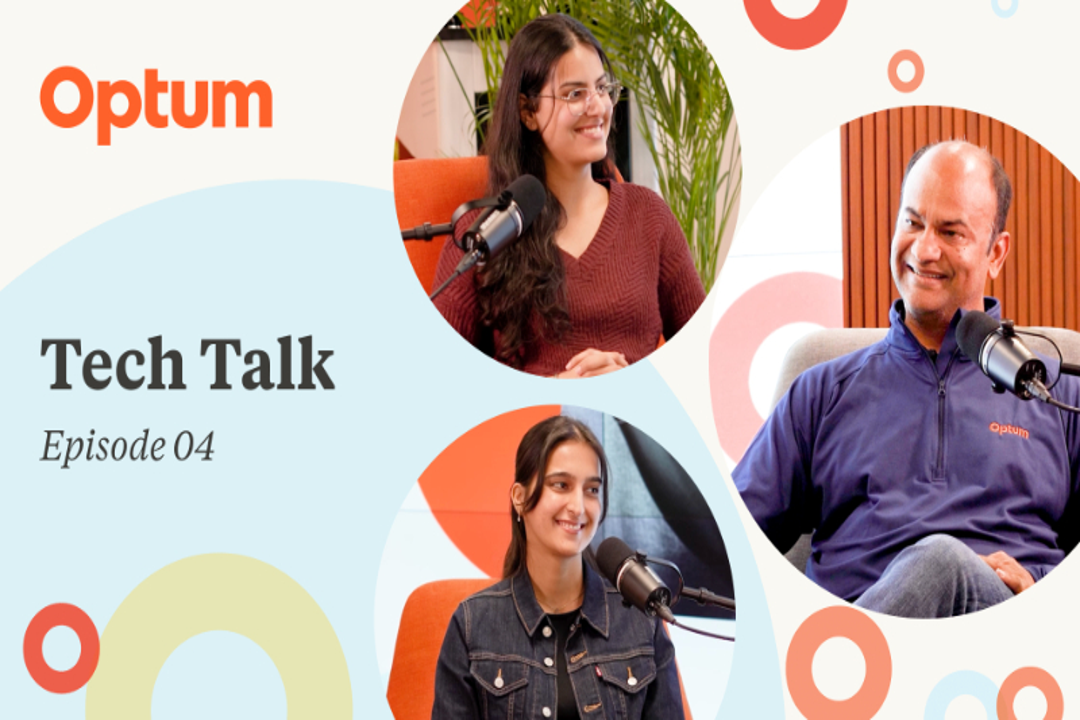
In episode 4, see how AI, cloud and real-time innovation are transforming health care, as Optum India leaders discuss proactive, human-centered care.
Video
Explore how AI, cloud, ethics and human‑centered skills are shaping health care innovation.