
For Your Innovation (FYI) is a video series dedicated to exploring the bold ideas that are redefining what’s possible in health care. We hope to spark dialogue, inspire action and empower teams to think disruptively.
In the latest episode, Rohit Agarwal, Vice President and Head of Transformation, Innovation and Enablement, sits down with Harish Gudi, Chief Information Officer at Optum India, to explore how emerging technologies are transforming health care delivery.
From artificial intelligence predicting health risks before symptoms appear to cloud enabling secure, real‑time collaboration, we’re moving from reactive to proactive care.
With AI embedded into real-time alerts, voice‑enabled EHRs and virtual assistants, innovation is accelerating. And with talent, experimentation and future‑ready capabilities in AI and automation, we’re making care smarter, faster and deeply human.
Transforming care with AI, cloud and human‑centered innovation
0:09 Hello everyone and welcome back to FYI
0:13 for your innovation a series on
0:15 healthcare innovation that we started a
0:17 few months back. In the last few
0:19 episodes we spoke about the why and the
0:21 what. Today we're going to focus on the
0:23 how and one of the critical elements of
0:26 how is technology. uh emerging
0:28 technology and how AI and other
0:31 technologies are really transforming the
0:33 way we look at innovation in healthcare
0:35 and making sure that healthcare is
0:37 changing innovating on a daily basis.
0:40 Today for this conversation I have with
0:42 me Harish Kodi CIO of Optimum India.
0:45 Harish welcome to FYI.
0:47 Rohit thank you very much. What a
0:49 pleasure it is to be here today. I
0:51 really love the play with words FYI for
0:54 your innovation.
0:55 Thank you. Thank you. Now we're excited
0:57 to have you here. Excited to kind of get
0:58 your take on technology and the role of
1:01 technology in healthcare innovation. And
1:03 maybe we start with that. Maybe we start
1:04 with the larger picture. Sure.
1:06 There's a tremendous amount of change
1:08 that's happening in healthcare. Um as
1:10 you know over the last few years,
1:12 technology is a key role plays a key
1:14 role in that. Uh if you think about
1:16 technology like AI, like cloud, they're
1:19 not just buzzwords anymore. They're
1:21 making fundamental changes to the way
1:24 healthcare is delivered on a day-to-day
1:26 basis. Just the pace of these
1:28 technologies making change in healthcare
1:30 is immense. Right. So I wanted to get
1:32 your thoughts on how technologies like
1:35 AI cloud are really really changing the
1:38 way changing healthcare over the next
1:41 few years.
1:42 Yeah Rohit um great question and you're
1:45 absolutely right. A lot is happening in
1:47 this space and this whole combination of
1:51 AI
1:53 uh all the new techniques we have with
1:54 data and cloud all coming together is
1:58 starting to change the landscape on AI
2:00 totally right but we should remember
2:03 that with the use of more technology
2:06 comes a lot of responsibility because we
2:08 are in the space of healthcare so
2:10 I want to start by saying that the first
2:12 things that technologists have to be uh
2:15 on top of in their game they need to
2:17 make sure u you know responsible use of
2:19 AI right what is data used for making
2:22 sure there is ethics is right making
2:24 sure the biases are not there I think
2:27 that's sacro sign because all of us
2:29 first of all carry a huge responsibility
2:32 on our shoulders of getting it right the
2:34 first time see because after all we're
2:36 dealing with human lives here right now
2:40 with that said with that being the
2:41 overarching thing that we'll be careful
2:43 about huge amount of things happening
2:46 Whether it is on the payer side,
2:48 provider side, consumer side. Let me
2:51 talk start with consumer first, right?
2:54 More and more consumer are wanting the
2:56 kind of experiences they have in retail
2:58 and in banking and other industries in
3:00 healthcare too. So consumer centric
3:03 healthcare is becoming sacrosan is
3:06 becoming the most important. Some of the
3:08 things that are going on and we've done
3:09 that inside our organization too is
3:12 looking at consumerf facing
3:14 applications. We kind of now have the
3:16 number one app out there in healthcare
3:18 which is able to help consumers with
3:20 seamless access to care, appointments,
3:24 scheduling, understanding status of
3:26 their services and status of their
3:28 claims and being able to you know price
3:30 and find care. I think these are all the
3:32 things that are happening from a
3:34 consumercentric point. Now it feels like
3:37 hey this is one good design front end UI
3:40 app but behind the scenes there's a lot
3:42 of interplay of data AI and analytics
3:45 that has to come together to give
3:48 consumers this experience.
3:50 Let's look at uh what are what are the
3:53 standard let's pick one challenge right
3:55 the consumer has a question has a query
3:59 they've probably interacted a couple of
4:01 times and are looking for a good quick
4:04 and good solution today what AI is able
4:07 do is identify which consumers need
4:10 help integrate data across systems
4:14 across departments based on uh usage
4:17 that is allowed and put together like a
4:20 view for our ad advocate to tell them
4:24 what this consumer is looking for and
4:26 how can you help them. What this does it
4:29 reduces a lot of friction abrasion
4:31 because in one call now I'm able to
4:34 address what the consumer is looking
4:36 for. AI is taking it even a step
4:38 further. We are able to identify
4:43 reasons why the consumer might call
4:46 tomorrow or in the future.
4:48 And AI is able to extrapolate all that
4:50 information and let us know that hey
4:53 this consumer might have a need. You may
4:55 want to proactively address that. Now
4:57 that can be done either through the app
4:58 or through digital media. What this does
5:01 is satisfies the need of the consumer
5:04 and they feel like hey look I'm
5:07 proactively being given the information
5:09 that I wanted anyway. And I think that's
5:12 the magic that AI is able to create
5:13 today on the consumer space. Let's look
5:16 at payer practitioner care provider
5:19 space.
5:20 What is their biggest challenge today?
5:23 Huge amount of procedures uh in terms of
5:27 documentation and things to be done and
5:29 followed
5:31 and hence uh physician fatigue less time
5:35 to actually do what is more important
5:37 which is empathize and spend time with
5:39 the patient. Today we have technologies
5:42 that are able to help note takingaking
5:45 to take away the administrative roles of
5:47 the care providers so that they they can
5:50 focus on what is most important for them
5:52 which is taking care of the patient and
5:54 taking the right decisions for them.
5:56 Last but not the least a lot of effort
5:59 being made to make the healthare system
6:01 work better for everyone
6:03 by making provider payer transactions
6:07 seamless. Like we now have products out
6:10 there that we use internally and in the
6:11 market as well
6:13 to seamlessly be able to you know work
6:17 with claims across payers and providers
6:20 so that
6:22 it's easy and there are it happens in
6:24 first pass and there's not multiple
6:26 rounds in this entire ecosystem.
6:28 Everybody's benefiting because the
6:30 member gets what they want faster sooner
6:32 the payers the providers get what they
6:34 want faster sooner
6:35 and the overheads of rework and you know
6:38 going through back and forth multiple
6:39 times on data to get the decisions
6:42 is also simplified. So these are the
6:44 kind of intervention that are happening
6:45 in the ecosystem today.
6:46 No thanks a lot. Uh I love the point
6:49 around consumerism right
6:51 because at the end of the day you know
6:52 healthcare I think is perhaps the place
6:56 where you know this entire industry
6:58 needs to be extremely extremely about
7:00 the consumer because it's very personal
7:02 right it impacts lives right
7:04 and that is why the more we able to
7:06 focus on the consumer keep the consumer
7:08 at the center I think the better our
7:10 focus on providing the right solutions
7:12 and making sure that we innovating
7:14 keeping the consumer at the center
7:16 absolutely
7:16 I also love the fact of you know what
7:18 you mentioned around you know being a
7:20 little bit more uh proactive right you
7:22 know rather than being very reactive in
7:25 the way we think about solutions think
7:27 about you know healthcare uh you know
7:29 being a little bit more predictive being
7:31 a bit more precise being very personal I
7:34 think that's the only way we can really
7:35 drive healthcare innovation and then do
7:37 it at a way that it can be scalable
7:40 across the entire value chain
7:41 so you talked about being more
7:43 predictive and being able to understand
7:45 outcomes and get better outcomes
7:47 VBC right value based care where we're
7:50 trying to build affordability engines to
7:52 look at how can we standardize care how
7:55 can we reduce errors
7:57 y
7:57 so that um you know care protocols are
8:00 standardized
8:01 um and you know delivered without much
8:04 error so value based care is a big part
8:06 of what you as well
8:08 no absolutely and you know I think all
8:10 of these solutions put together will
8:12 just help make sure that you know we
8:14 becoming um you know like you may
8:16 mentioned in the taking consumer focus
8:18 but you know as a company right we're
8:20 known as you know the
8:22 innovators around uh healthcare uh so so
8:25 great great thoughts right I think also
8:28 if you really think about all of this
8:29 innovation cannot happen in silos right
8:32 uh it needs to be done in a way that
8:34 you're bringing multiple elements
8:36 multiple people multiple voices uh
8:39 together right collaboration becomes so
8:41 critical right um you know gone of the
8:44 days when you can think about you know
8:46 small elements of the problems that you
8:47 solve. A lot of the small hanging
8:49 lowhanging fruits are already taken away
8:51 and the only way that you can solve
8:53 large big problems is by um you know I
8:57 think you mentioned it data process
8:59 technology all coming together uh I know
9:02 we do this really well on optimum um so
9:04 what are your thoughts and you know some
9:06 of the ways in which optimum technology
9:08 and optimum operations coming together
9:10 to really drive innovation? Beautiful
9:13 question. Um, innovation happens at the
9:16 seams. Cutting edge innovation happens
9:19 at the edges, right? Which means it's
9:21 happens at the edges where ops meet
9:23 tech. It happens at the edges where
9:26 engineering meets ops. It happens at the
9:28 edges where product meets tech and ops.
9:30 And of course all the practitioners out
9:32 there uh who are the caregivers, nurses,
9:35 practitioners.
9:37 Uh obviously you're aware of the program
9:39 that we are running currently which is
9:40 called hash sitwithops.
9:43 This is about not sitting in your cube
9:47 or corner office and imagining what
9:50 somebody might want versus going zero
9:53 distance and sitting down with them on
9:55 the daily basis to see what they go
9:57 through as an advocate to see what
9:59 members go through from a you know
10:01 experience perspective to see what nurse
10:04 practitioners and providers go through
10:06 on a daily basis. When you zero in and
10:09 go deep, you're able to do real
10:12 solutions and you're able to do
10:13 solutions that are at the intersection
10:16 of all these, you know, people who are
10:19 using your solutions and also at the
10:21 intersection of data and the cloud and
10:24 etc. I think that's a big thing that's
10:27 really really worked for us. Um if you
10:30 look at um advocates out there, you
10:33 know, they're trying to do good work but
10:36 they're overburdened again by administrative
10:38 tasks that they sometimes have to do.
10:41 Uh there is toggle tasks um toggle tax,
10:44 there is uh multiple applications they
10:48 have to go to to look up information. A
10:50 lot of the quick AI is also able to help
10:54 get all these interfaces and seamlessly
10:56 together to be able to help the advocate
10:59 spend time on what it matters and not on
11:01 this administrative lookup.
11:03 Remember it also reduces a lot of
11:06 friction and frustration in the in the
11:08 minds of these people who are working
11:10 for them. The most important thing to be
11:13 successful is not the tech and not just
11:16 the job of getting these tasks done but
11:20 to be able to empathize
11:23 with the end user member on the other
11:25 side and if that's the focus you can't
11:28 be frustrated yourself and these are
11:30 things that we're trying to do
11:31 in the system to enable that then of
11:33 course
11:34 right behind you innovate right
11:36 so all bottomup ideas bright ideas tech
11:39 tank that all roll
11:41 into groundup ideas because sometimes
11:44 you don't see the ground level
11:48 challenges uh when you come up with top
11:50 down approaches. So it's very important
11:51 to take bottom and top down approaches
11:54 and make the ends meet to give the real
11:56 innovation to people who matter. great
11:58 examples uh you know sit with ops you
12:01 know I've seen this in action over the
12:02 last two years or maybe a little bit
12:04 more than that right and you know
12:06 whenever you do this yourself as well as
12:08 whenever you see people doing it you
12:10 know you can literally see those light
12:12 bulbs you know flashing right and it's
12:14 just an amazing way of you know getting
12:17 the right people together and helping
12:19 people really empathize you know on the
12:23 problems that everyone else is facing
12:24 right tech understanding the ops
12:26 problems ops understanding understanding
12:28 road maps ops understanding what are the
12:30 new changes that are coming
12:31 and that I think intersection is so so
12:34 important to drive innovation
12:36 and technology is helping even in these
12:38 interventions today right if you look at
12:40 task mining or process mining even that
12:43 is now getting so highly powered by AI
12:46 true
12:46 that we are able to like take 10,000
12:49 advocates who are doing particular
12:50 process you know obviously there's
12:51 multiple streams and complications there
12:54 but if I put a process and task mining
12:56 AI I led on top of all of that we're
12:59 able to garner these insights and say
13:01 here are the top eight things if I solve
13:04 I can reduce the average handling time I
13:06 can increase my advocate NPS
13:08 and be able to reduce frustration
13:10 correct a
13:10 lot of technology is enabling even these
13:12 discovery
13:13 absolutely absolutely yeah
13:14 and you spoke about innovate right
13:16 innovate which is our innovation
13:17 platform right it's really helping us
13:20 democratize innovation right it's
13:21 helping us make sure that whether you
13:23 are a frontline agent the advocates that
13:25 are handling calls uh claims associates,
13:28 right? Or you are executives in the
13:30 company, managers, leaders, right? It's
13:33 creating a common language that everyone
13:35 can use to talk about ideas and ways in
13:38 which they can solve problems. Again,
13:40 keeping the consumer at the center. It's
13:42 bringing together like I mentioned
13:44 earlier, data, technology, process
13:46 insights, deep insights that we get from
13:49 task mining. all of them together to be
13:51 able to create solutions that are
13:53 focused on the right problems and are
13:56 helping us deliver value and solutions
13:57 at scale right and I think that is a
14:00 very critical element of you know how we
14:02 drive innovation none of that though is
14:05 possible without the people right and I
14:07 think with the advancement of technology
14:10 I think it's very important for our
14:11 talent to also make sure that they are
14:13 future ready
14:14 right and I think the tech talent the
14:17 way that they are making sure that they
14:19 drive the innovation
14:20 is going to be critical for the future.
14:22 So Harish, I wanted to get your thoughts
14:24 on the role of technology talent in the
14:27 future of innovation and healthcare.
14:31 That's a very interesting question, very
14:34 obvious answer, but let me break this
14:36 down a little bit. Right? We're talking
14:39 of technology here, but the talent is
14:41 not just technology, right? Talent needs
14:44 to have technology, needs to understand
14:47 the business domain and principles and
14:50 need to know how to articulate and tell
14:53 a good story.
14:56 Technology, you know, we already talked
14:58 about the fact that you really have to
15:00 be good at AI. It's AI in everything.
15:02 Cloud is important. Data and analytics
15:04 is all important. And these have to all
15:06 come together. From a tech talent
15:09 perspective, we have a lot of
15:11 investments in training that we are
15:13 doing. across the enterprise.
15:15 Um for example, we work we've worked on
15:18 an AI dojo certification
15:21 which is kind of becoming the leading AI
15:23 certification in healthcare. They end
15:25 with healthcare examples, healthcare use
15:28 cases and healthcare capstone. Uh we run
15:30 this with the optim university and more
15:34 than 60 70% of our staff now is actually
15:38 AI dojo certified. Then of course we
15:40 have cloud trainings on various cloud
15:42 models because we are a multi cloud
15:44 environment um that we have
15:46 certifications there in data and
15:47 analytics but um look more importantly
15:52 it's
15:54 imperative that our people understand
15:57 business domain well right
16:00 you can you can train on AI
16:03 you can train on business separately
16:06 but the advantage that we have at optim
16:09 is we have people who've been in the
16:11 organization for a long time now.
16:13 True.
16:13 And the journey of transforming the
16:16 existing talent into AI first talent
16:19 using
16:20 you know interventions like AI dojo and
16:22 you know co-pilot certifications that we
16:24 are doing makes a big difference to add
16:27 to that uh you know we have um good
16:31 number of ops correct training that is
16:34 in progress. In fact, as part of some of
16:37 the tech training, particularly on
16:38 co-pilot where you can, you know, play
16:41 uh with technology even though you may
16:43 not be a real coder
16:45 u more than 500 600 people from ops have
16:48 also participated in that and ideated as
16:51 part of that. I think that ecosystem has
16:54 really come out well. Obviously from
16:56 time to time we uh you know we instill
17:00 fresh talent as well from the outside
17:03 who are AI first talent.
17:05 When these two powerhouses come together
17:08 ingrown AI talent which is deep in
17:10 domain and have transformed themselves
17:13 and AI talent that may not necessarily
17:15 be healthcare but has come from the
17:16 consumer industry come from the retail
17:18 industry come from consulting
17:20 industries. When you combine all of
17:22 these and create solutions, magic
17:24 happens. Right? Uh the reason I'm saying
17:28 magic happens in this model is because
17:32 people who work on these problems have
17:34 to have a deep understanding of
17:36 healthcare, healthare policies,
17:39 healthcare technologies, healthcare
17:41 compliance, right? And deep domain
17:44 knowledge. Without that, this
17:46 transformation does not happen. Last but
17:48 not the least, you have a great idea,
17:51 but you can't tell a good story.
17:53 You can never convince anybody that it's
17:55 a great idea, right? Yes, you might get
17:57 lucky. You might had somebody who really
17:58 really listens well and sees that light
18:01 bulb go off. But I think it is very
18:03 important that all our talent know
18:06 y
18:06 to innovate and to tell the story of
18:09 what they're proposing because that's
18:11 when you can bring it to life. I think
18:14 this is what makes talent well-rounded
18:17 and not just some one technology tool
18:20 that I can use and make a difference
18:21 happen.
18:22 Well, that's so true. Right. And I love
18:24 your point on domain because this is an
18:27 industry, this is a place where without
18:29 understanding the underlying factors,
18:31 the process, the technology, your
18:34 ability to make changes is not going to
18:36 be easy, right? Um like I said gone of
18:39 the days when you know a simple fix
18:40 could solve problems and bring a lot of
18:42 value. Now we solving really complex
18:45 problems and your understanding of your
18:47 domain combine that with technology and
18:50 just the hunger to look at innovation is
18:52 so critical. I love the I love the way
18:54 we're thinking about um you know
18:56 training on AI which is very persona
18:58 based which is making sure that we're
19:00 capturing and going out to various
19:04 personas and people that are existing
19:06 within the organization. So it's not
19:08 just technology, it's you know all of
19:10 technology, all of operations, all of
19:12 functional areas and catering to
19:14 different levels of the organization
19:16 because at the end of the day when you
19:17 put technology and talent together, I
19:19 think that's the only way we can drive
19:20 innovation. Innovation which is
19:22 sustainable and can really scale across
19:24 the organization. Harish this was really
19:27 wonderful. Thanks a lot for your
19:29 thoughts. Uh thanks a lot for your
19:30 insights. It's clear that innovation at
19:32 Opterum is obviously trying to make
19:34 things better is is really rapidly
19:38 making changes to the lives of the
19:40 people that we serve but it is also
19:42 sustainable. It is also deeply deeply
19:44 human which I think is something that
19:46 you know we as a company strive for.
19:49 It's there in our mission. It's there in
19:50 our vision. So thanks a lot for your
19:52 insights. You know, if you think about
19:53 like you mentioned AI, if you think
19:55 about cloud, if you think about, you
19:57 know, the focus on domain, the focus on
19:59 talent, I think those elements coming
20:01 together is making sure that we really
20:03 making changes that are not just, you
20:06 know, vision, it's making changes that
20:09 are real and that are changing dayonday
20:12 lives of the people that we serve. So,
20:14 thanks a lot for your inputs.
20:16 Absolutely, Rohit. So, let me just say
20:19 this one more thing, right? Yes, we're
20:22 making a big difference with technology
20:24 in innovation in Optim and at UG. But
20:28 look, remember what's our mission? Yeah,
20:31 we are here to help people live
20:33 healthier lives
20:34 and to help make the health system work
20:36 better for everyone. Mhm. So as
20:38 technologists out there in the industry,
20:39 we are also out there with solutions,
20:42 products and services that are available
20:45 to the healthcare ecosystem with a sing
20:48 simple and single motive of making it
20:51 better for everybody out there and not
20:53 just for ourselves. Rohit, thanks a lot.
20:57 It was a pleasure talking to you and um
21:00 I hope we can do this more often.
21:02 Likewise, Harish. Thanks a lot. And to
21:04 the people that are tuning in, thanks a
21:06 lot for watching. Thanks a lot for
21:08 listening to the fourth edition of FYI.
21:11 Hey, remember uh innovation that is
21:14 driven by empathy, powered by passion,
21:16 and enabled by technology is the kind of
21:19 innovation that will last. It's the kind
21:21 of innovation that will stick and make
21:24 sure that we changing lives on a
21:25 day-to-day basis. Thanks a lot for
21:28 watching. Keep innovating on a daily
21:30 basis. Thank you.
Related healthcare insights
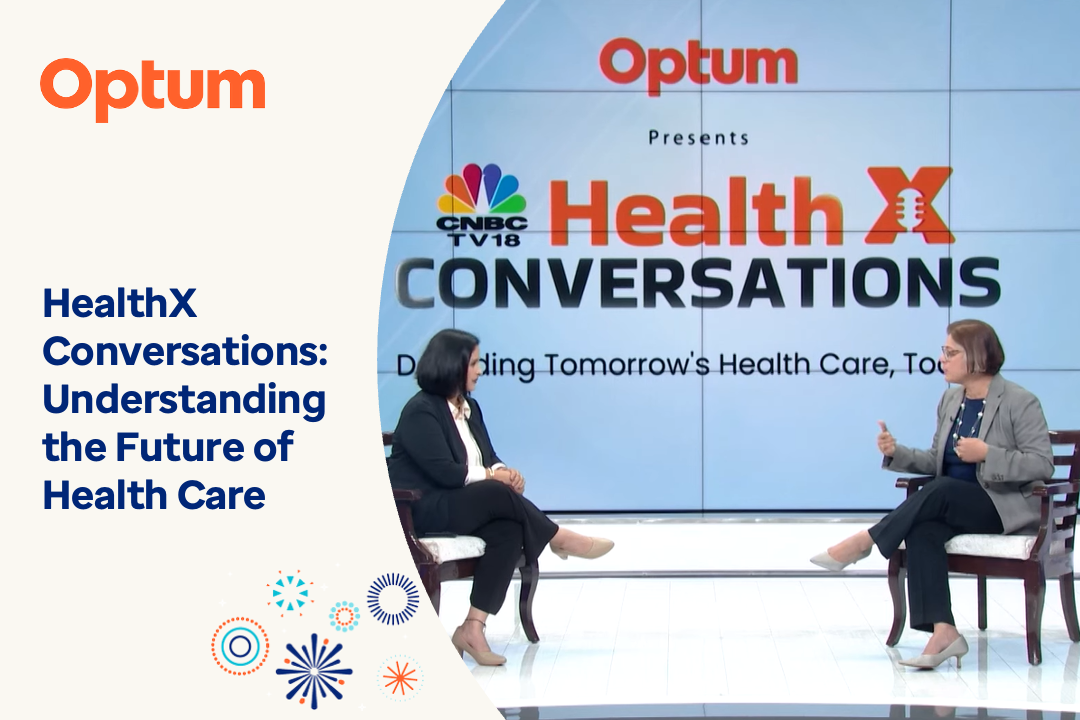

Article
This platform fosters impactful conversations and drives solutions for a more flexible, progressive healthcare ecosystem.

Video
Women in health care technology are leading change, building new ways to listen and respond to those we serve.
Video
Healthcare is evolving—technology is the catalyst for better access, smarter insights, and more human-centered care across the globe.