Podcast

For Your Innovation Podcast: Innovation trail with Dr. Patrick Conway

In episode 5, see how AI, operations and global teams drive responsible innovation and real healthcare impact across regions.

7 July 2026 | 25-minute watch

For Your Innovation (FYI) is a video series dedicated to exploring the bold ideas that are redefining what’s possible in health care. We hope to spark dialogue, inspire action and empower teams to think disruptively. 

In this special edition, Rohit Agarwal, Vice President and Head of Transformation, Innovation and Enablement, sits down with Dr Patrick Conway, Chief Executive Officer, Optum, for a conversation that travels across India and the Philippines, exploring how enterprise innovation takes shape on the ground.

From applied artificial intelligence and technology operations collaboration to clinician experience and global talent, the discussion highlights how innovation is not built in isolation but shaped through real-world challenges and everyday decisions. 

As organizations move from ideas to impact, innovation is becoming more intentional, responsible and deeply connected to outcomes.

With a strong focus on responsible AI, scalable operations and a globally connected workforce, this episode underscores how strategy translates into meaningful healthcare impact across regions. 

And with culture, collaboration and purpose at the core, innovation continues to evolve into something that is not only technical but human, practical and enduring. 

Watch the full conversation.

0:00

[music]

0:05

[music]

0:11

Hello everyone and welcome to a special

0:13

edition of FYI for your innovation. FI

0:17

is going on an innovation trail across

0:19

geographies of India and Philippines

0:21

where we look at how innovation is

0:23

driven in different contexts at each

0:25

location. We'll understand how

0:27

innovation is really driven on the

0:28

ground and how that drives outcomes

0:31

linked to the priorities of Optum. And

0:33

for this special edition, I am delighted

0:36

to have Dr. Patrick Convey, CEO of

0:38

Optum. Patrick, really, really delighted

0:40

to have you here. Uh, welcome to FYI.

0:43

Really excited to hear about your vision

0:46

of healthcare innovation.

0:47

Yeah, thanks for having me. Look forward

0:49

to the discussion.

0:50

Thank you. Thank you. So, Patrick as we

0:52

begin the India leg um I think it's

0:53

important to set a little bit of a

0:55

context. I think at an enterprise level

0:57

Our priorities our north stars are very

0:59

clear right how do we drive better

1:01

health outcomes uh by making healthcare

1:03

more uh accessible affordable and

1:05

efficient right um and how do we make

1:08

sure that you know that intent is

1:10

translated into outcomes that we can

1:11

deliver for the communities that we

1:13

serve the populations that we serve and

1:16

I think innovation plays a key role in

1:18

that right uh innovation itself is

1:20

focused on key priorities like consumer

1:22

centricity customer centricity how we

1:25

deploy technology, how we use

1:26

responsible AI, how do we use talent uh

1:30

globally across the organization and I

1:32

think that all these themes and

1:34

priorities aren't you know standalone

1:36

priorities. These are interconnected and

1:38

they define how we really uh make

1:41

decisions across the company and how

1:43

does you know how do we really translate

1:45

the value back to our uh consumers

1:48

that we serve uh you know through the

1:50

questions that we have would love to get

1:51

your thoughts your perspective on these

1:54

uh these questions and

1:55

I look forward to the dialogue.

1:56

Thanks a lot. Okay. So, first

1:58

question, let's uh dive in, right? Um

2:01

firstly, I just wanted to get your

2:02

vision for the future of healthcare

2:04

innovation and how does that vision

2:06

translate into the work that we do

2:08

within Optum. How does that translate

2:10

into the innovation that we drive within

2:12

OPTIM?

2:13

Yeah. So, I think about both populations

2:16

and the individuals and how we innovate

2:18

to improve care. Um so at our core as

2:21

you know help helping people live

2:22

healthier lives helping make the health

2:24

system better for everyone which I think

2:25

resonates from a mission perspective.

2:27

Then if you think about our various

2:29

platforms we serve uh over a 100 million

2:32

people directly

2:34

their physical, mental, social, pharmacy

2:37

and financial needs and we can innovate

2:40

to care for them and all types of

2:42

settings. Uh, so we serve people in

2:44

clinics, in their homes, mental and

2:46

behavioral complex conditions, really

2:48

from birth all the way to death.

2:50

Yep.

2:51

Um, we're in an era now with innovation

2:54

and artificial intelligence, which I

2:55

think opens up a [clears throat] whole

2:57

new realm of innovation. You know, if

3:00

you think about our Optimum Insight

3:02

business, we're making care simpler,

3:03

faster, easier. You know, how do we get

3:06

that claim paid? Uh, how do we get that

3:08

service delivered? How do we answer that

3:10

question digitally as opposed to through

3:12

call centers but also call centers when

3:14

necessary and empowering people with the

3:16

right information at the point of care?

3:18

If you think about our pharmacy

3:19

innovation, you know, I like to give out

3:22

uh both data and stories. Uh we

3:24

developed something called specialy

3:26

savings IQ that saves money for

3:28

specialty medicines.

3:29

The median co-ay for patients went from

3:32

$88 to $5. saved over a billion dollars

3:35

for people out-of-pocket cost, AI

3:38

powered and enabled at the point of

3:40

care. Then I get an individual email

3:43

from a gentleman who said, "I was going

3:44

on and off my cancer treatment. Uh it's

3:47

now $5. I can afford it. I've stayed on

3:49

my treatment. Uh and I'm doing better.

3:52

I'm healthier." Uh so that's like the

3:54

impact we can have day-to-day. So

3:56

hopefully those are just a couple

3:57

examples of innovation and action. And

3:59

just you mentioned the geos. I I'm in

4:01

India today. Hey, we're going to go to

4:02

the Philippines.

4:04

The [snorts] level of innovation uh here

4:06

uh that I've seen today is just

4:08

applicable across that whole system.

4:10

Thanks a lot. You you spoke about AI and

4:13

you know AI driving innovation. I mean

4:15

just at the scale and you mentioned the

4:16

scale right that we have at Optum.

4:18

I I don't think technology and AI are

4:20

just about efficiency. I think they

4:22

define the way health care systems

4:24

actually function and how do those you

4:27

know really drive you know the final

4:28

outcomes and the value that you know we

4:30

have to deliver for our consumers. What

4:32

from your perspective you know really

4:34

distinguishes technology based

4:37

innovation that is really impactful.

4:39

Yeah. So I'd call it a couple areas. So

4:43

let's uh first call out some of the sort

4:46

of administrative aspects of healthcare

4:49

which can be simpler. Um it should

4:51

function like other parts of our lives.

4:53

Y

4:54

simple on your phone when possible

4:57

digital empowered with the right

4:59

information. You've got information

5:00

about the quality, the cost, the

5:01

experience of care. Uh and so we we are

5:05

innovating to deliver that experience to

5:06

people each and every day.

5:08

Um now let's go into the clinical realm.

5:11

So I'm I'm still a practicing uh

5:13

physician on weekends. um very early in

5:17

my career took care of a child with a

5:19

very complex illness had gone all around

5:21

America came to our children's hospital

5:23

very thick chart paper uh get to page

5:26

283 realize oh my gosh this child has a

5:29

very rare metabolic disease well in

5:32

today's world we should be able to scan

5:34

that information tee up to the clinician

5:36

whether it's a doctor a nurse a

5:38

pharmacist did you consider this what

5:40

about these options the clinician's

5:41

still making the final decision uh but

5:44

much more fast, efficient, better for

5:46

the patient, better health outcomes at

5:47

lower cost. So, just a couple examples

5:49

of innovation in action.

5:51

I like I like what you said, you know,

5:53

making innovation simple and

5:55

simplifying, you know, the work um you

5:57

know, for our teams internally as well

5:59

as for the patients that we serve,

6:01

right? And I think one of the themes

6:02

that we see is that uh innovation, you

6:05

know, really really takes off when you

6:06

are able to drive a lot of collaboration

6:08

amongst teams,

6:09

specifically you know, technology teams

6:11

and operating teams. um you know when

6:13

these teams come together have one

6:15

purpose you know shared agenda I think

6:18

that's where you know the magic happen

6:19

that's where the innovation happens what

6:21

are some of the ways that you've you

6:23

know really driving that and fostering

6:24

that culture of collaboration amongst

6:27

teams

6:27

yeah first just to call out to what I

6:29

saw this morning with the teams in India

6:32

uh I didn't say this because you all

6:34

showed it to me the technology team when

6:37

businesses and processes work their best

6:40

the teams are seamlessly integrated

6:43

technology, operations, product, the

6:46

whole team

6:47

delivered around the customer, the

6:48

patient, the people we served. And

6:50

that's what I saw this morning.

6:51

And when that happens, the magic

6:53

happens, if you will, of people learn

6:55

faster. Um,

6:58

I like stories. So, uh, one of my very

7:01

first jobs, I had a mentor named Dr. Uma

7:03

Kodigal,

7:04

and I was improving care on one unit for

7:07

15 children and families that went

7:08

through that unit with a nurse partner.

7:10

And she had trained thousands of

7:11

healthcare leaders.

7:13

And I said, Uma, uh, you [snorts] know,

7:15

what did you learn? What what what made

7:18

teams succeed? And she said, cycle time.

7:22

Said, tell me more. She said, cycle

7:24

time, testing and learning. The teams

7:26

and the people that test and learn

7:27

faster, they improve faster, they

7:30

deliver better care, better outcomes.

7:32

And I and I saw that this morning. you

7:34

know, teams with a fast cycle time

7:36

working well together. That's what's

7:38

going to deliver the best outcomes for

7:39

the people we serve.

7:40

No, that's exciting. And I think uh

7:42

you're right, teams coming together have

7:44

an impact on cycle time. I think it also

7:47

ensures that you know you're looking at

7:50

the same problem with different mindsets

7:53

and different viewpoints and I think

7:54

that's when

7:55

you know that collaboration really

7:57

ignites that innovation, innovative

7:59

mindset, right? Um you know we spoke

8:01

about just global uh talent earlier and

8:05

companies are becoming more global in

8:07

the in the work that they do not just

8:08

the footprint but also how they leverage

8:10

talent across uh locations talent to

8:13

drive accountability innovation you know

8:15

all those things right so

8:17

uh what are some of the ways in which

8:19

you think the global talent can actually

8:21

drive healthcare innovation and what are

8:23

some of the things that the enterprise

8:25

leaders need to do to be able to really

8:27

tap into this potential

8:29

yeah look I think um you know Optum is a

8:32

global company and I it's one optimum

8:35

across the entire enterprise. Uh and I

8:37

think let's build on the theme we just

8:39

talked about. How do our people in

8:41

India, Philippines, other places

8:44

work seamlessly with people in the

8:46

United States and all over to deliver

8:48

the products and services that deliver

8:50

better health outcomes, lower cost and

8:52

exceptional experience to the people we

8:54

serve. And that you know that's

8:56

missiondriven work that matters. Um it

8:58

should be birectional which I think I

9:00

saw a lot of today. Um you know I've

9:03

been reflecting on this as you get older

9:05

you reflect more. So uh um we we

9:08

probably need leaders in the US that not

9:10

only have been here but really have a

9:12

sort of global perspective.

9:13

Uh I shared earlier I traveled all

9:16

around India 22 years ago. I didn't

9:18

share I I grew up in Texas and we didn't

9:20

have uh we didn't have resources to

9:22

travel so I'd never been anywhere. Uh,

9:24

and then I got a scholarship to go to

9:26

college, which sent me to Italy,

9:28

and I learned there was a world outside

9:30

of the United States. Um, and now I've

9:32

traveled over 90 countries. Um, and, um,

9:37

it was, you know, often with a backpack

9:39

and a tent. Um, uh, including that's how

9:42

I travel around India, by the way. I I

9:44

shared earlier. And the third class

9:45

trains, I was not kidding. I was, I had

9:47

a little paper timetable. I don't they

9:49

have those anymore, but like to figure

9:51

out which train to get on. Um and um

9:54

look it opens your it opens your mind if

9:57

you will whether you're from the United

9:59

States or or India to the global uh

10:02

marketplace and learning globally and

10:05

then applying those learnings locally

10:07

and in our various products and

10:09

services.

10:09

Yeah. No, I love the stories Patrick u I

10:12

think that's what makes you know the

10:14

intent get converted into something

10:16

real. Yeah.

10:17

So thanks for that. uh we've covered you

10:19

know uh many topics right like

10:21

globalization like making sure that

10:23

we've got a global mindset technology

10:25

and you know how do we think about

10:27

healthcare innovation as a whole um that

10:30

will bring us uh bring the India leg to

10:33

an end we'll continue the conversation

10:35

in Philippines uh again thanks a lot for

10:37

sharing your thoughts thanks a lot for

10:38

sharing your perspectives

10:40

can I share you one thing and then you

10:41

can decide whether

10:42

look um interacting with the teams today

10:46

I was inspired Mhm.

10:47

Um

10:49

you get to see see people bringing their

10:51

best selves to work and actually also

10:53

inspired I mean you have people in India

10:56

missiondriven

10:57

y

10:59

delivering services that may that do

11:03

help people across the globe.

11:04

Yep.

11:05

That's inspiring. It's inspiring to see

11:07

it. It was inspiring to see the team

11:08

today and I look forward to continuing

11:10

to learn and help along the way.

11:12

No, absolutely. and the teams are

11:13

excited to see you hear from you and I

11:16

think that motivates them immensely. So,

11:18

thanks a lot.

11:19

Thank you,

11:23

Patrick. Thanks a lot for being here and

11:25

welcome to the Philippines leg of the

11:27

innovation trail, the special edition of

11:30

FI.

11:30

Yeah, it's great to be here. Thanks for

11:32

having me.

11:32

Thank you. Um folks um and viewers, this

11:36

is the second edition of Innovation

11:38

Trade. Um we did the first one in India

11:41

where Patrick um shared his perspective

11:43

and his views on innovation and the

11:46

enterprise themes. Uh he spoke about

11:48

innovation which is led by technology

11:50

responsible AI collaboration between

11:52

teams and how are we bringing data and

11:54

insights together to really accelerate

11:56

innovation. We'll continue that

11:58

conversation uh and that you know

12:01

foundation that he laid and talk a

12:02

little bit about how does innovation

12:04

really show up to drive improvement in

12:07

experience and care. Um those are three

12:10

key levers for us as we think about

12:12

driving innovation across the company.

12:14

Patrick once again thanks a lot for

12:16

being here and really excited to kind of

12:18

continue the conversation.

12:19

Yeah, look forward to the dialogue.

12:21

Absolutely. Uh Patrick, the first

12:23

question that I have and we spoke a lot

12:25

about uh experience, right? Um what are

12:28

some of the ways in which we are looking

12:29

at reducing the friction across the

12:31

journey of our consumer and making sure

12:34

that we creating a seamless and a really

12:37

flawless experience for the communities

12:39

and the members and the providers.

12:41

Yeah. So a couple a couple thoughts. Um

12:44

you actually saw some of this in the

12:45

examples we just went through. You know

12:48

at first just the importance of

12:50

experience. So uh every time you all

12:55

those experiences whether they're

12:56

positive or they're one of the potential

12:58

failures or challenges is some

13:00

individual family person in the system.

13:02

So it's an opportunity for us to do

13:03

better. Uh two um every organization

13:07

I've been including this one I tap into

13:09

the so-called complaint system. Uh it's

13:12

an it's an opportunity for improvement.

13:14

It's not a complaint system. It's

13:16

actually an opportunity of how we

13:17

improve our system. And then if you

13:19

think about the future and we hit we saw

13:20

this in a bunch of these digital

13:23

um long ago for Andrew Witty I wrote

13:26

something about like an app a digital

13:28

interface that everyone in the world

13:30

it's actually world not just the US

13:33

could interface with and would navigate

13:35

them to care. I think we're getting

13:37

closer and closer to that and you saw in

13:39

some of these examples where any

13:42

individual for their physical, mental,

13:45

pharmacy, social, financial needs, we

13:48

would be able to navigate them to care.

13:50

We'd predict their needs using AI and

13:52

data. Uh we would make sure they don't

13:56

fall through the cracks in the system.

13:58

Uh and we do it at a much more

14:00

individualized basis because we truly

14:02

understand them. You know, uh, I often

14:06

talk about Mrs. Rodriguez with teams.

14:08

There's somebody's 90year-old

14:11

mother. Um, and a lot of people care

14:14

about her and she expects and her

14:18

caregivers expect that our various

14:20

systems, pieces and parts will be able

14:22

to innovate, care for her, understand

14:24

her needs each and every time. So that's

14:26

the journey we're on.

14:27

No, thanks a lot. uh just in this

14:29

example you know you spoke about how the

14:32

clinicians and the physicians are you

14:34

know looking at driving a better

14:35

experience in care uh and you've spoken

14:37

about this multiple times right just

14:40

alongside experience of our members and

14:42

providers the clinician experience is so

14:44

important

14:44

y

14:45

uh because how the clinicians work will

14:48

actually impact how healthcare is

14:50

actually delivered and uh you know

14:53

there's a lot of friction in that

14:54

clinician workflow there's a lot of time

14:56

that they spent on activities ities

14:58

which do not translate into the quality

15:00

of care that they actually provide.

15:02

Y

15:02

what are some of the ways that you see

15:04

in terms of innovation that is really

15:07

changing and improving the clinician

15:09

experience and in ways that it's

15:11

impactful and in ways that it'll be

15:13

sustainable.

15:14

Yeah. So um feel like I'm giving a lot

15:17

of clinical examples today but hopefully

15:19

uh let me give you the challenge and

15:20

then where we need to go. So um uh

15:23

earlier in my career I worked

15:24

internationally lots of places. So I

15:26

remember being in Ghana seeing 100 plus

15:28

patients a day um and understanding the

15:31

challenges of system and how to navigate

15:33

uh the patients in that system. Uh I

15:35

worked in a federally qualified health

15:37

center in the US where you'd see 50 plus

15:39

patients a day because there was a lot

15:41

of need and you'd hand them pieces of

15:43

paper realizing that many of those

15:46

doctors or behavioral health therapists

15:47

may not even return their call. You

15:49

didn't know which ones because you

15:50

didn't have a system. If you're a

15:52

doctor, a nurse, a pharmacist, whatever

15:54

kind of clinician, you trained because

15:56

you want to deliver amazing care to

15:58

people and our system doesn't always

16:00

support that. So, what we're doing at

16:01

Optum, and you saw once again examples

16:04

here, you know, how do we support that

16:06

doctor, pharmacist, nurse, whoever the

16:07

clinician is, provide them the

16:10

information at the point of care they

16:11

need for that patient, that family, that

16:13

person they're caring for so that they

16:16

can address their needs.

16:18

um you know the some of the

16:20

administrative so-called administrative

16:22

tasks that we you know just reviewed

16:25

when you resolve that claims issue

16:27

that's a person when you resolve that

16:29

call that's a person and when you

16:31

resolve the uh co-pay amounts um so I

16:36

you know honestly [clears throat] the

16:38

teams that we just witnessed are

16:42

crafting the future right now and I

16:44

think being in the Philippines just to

16:45

call out something we talked about Earl

16:48

you actually see our system across its

16:51

pieces and parts. You're you're an

16:53

excellent window into where we might

16:55

have failures in the systems and can

16:57

innovate to fix and address those

16:59

failures which ends up benefiting

17:01

millions of people.

17:02

Absolutely. Absolutely. And you talked

17:04

about the fact that we crafting the

17:05

future. I think the future is exciting.

17:07

It is

17:07

uh the future is something that will

17:09

definitely help us create a much better

17:11

experience for the members that we are

17:13

privileged to serve.

17:14

Yes. Um uh and you talked about you know

17:16

just the millions of transaction I mean

17:18

that's the unique part of the work that

17:20

we do of the ecosystem that we have

17:23

millions of calls millions of claims

17:25

millions of you know prior authorization

17:26

transactions

17:28

which basically means that we have a

17:30

many opportunities to be able to look at

17:33

the experience across the journey of the

17:35

member and the provider. uh and what are

17:37

some of the ways that you think we're

17:39

using technology and data to get much

17:41

deeper insights into these uh touch

17:44

points uh and make sure that we're not

17:46

just improving that moment but the

17:48

entire end to end journey of a member.

17:52

Yeah, [clears throat] I'll share a

17:53

couple examples but feel free to add on.

17:56

Um

17:57

you know in in Optim

18:01

uh we did work that uh continues to

18:03

improve today around specialy medicines

18:05

and how do you solve for the financial

18:08

aspect [clears throat] excuse me for

18:10

specialist savings IQ and AI powered

18:12

product uh over has saved over a billion

18:16

dollars uh of consumer out-of- pocket

18:18

cost over the last year. Um you know

18:21

lowering copay to $5. Then you get an

18:24

email, true story, from somebody who

18:26

says, you know, I can finally afford my

18:27

cancer medicine. Um, so I'm doing

18:30

better. Um, you know, in Optimum Health,

18:33

we have a lot of positive examples and a

18:35

lot of opportunities to knit that system

18:37

together. So the clinic to the home to

18:40

the therapist, you know, whether it's an

18:42

employed or a contracted physician, it

18:45

all knits together delivering and and to

18:47

be clear, we have a platform that's

18:49

delivering better quality, lower cost

18:50

experience today. Okay, but it's how do

18:52

you make that better? How do you make it

18:53

better faster? You know, you saw some

18:55

examples from our Optimum Insight and

18:57

Optimum Financial business where you

19:00

know uh for something like uh Optimum

19:02

Real or Optimum Integrity 1, you know,

19:06

how do we uh literally automate the

19:09

system in a digital way so that claim

19:12

and Optimum Real the payer knows what

19:14

they're going to pay, the provider knows

19:15

what they're going to be paid and it's

19:16

by the way the same

19:18

based on the same data and information

19:20

and the consumer knows what they're

19:21

going to be paid and it's not, you know,

19:24

49 9 faxes or paper mailed. I still

19:28

amazed at how much we fax and mail. It's

19:30

actually digital like other things on

19:32

your life on your phone. Um and you can

19:34

by the way settle it with Optimum

19:36

Financial if you choose to in your

19:37

Optimum wallet. Um so I mean we really

19:40

are crafting the future uh today. Um and

19:43

I think um just so exciting to see the

19:47

teams and uh hear your energy as you

19:50

talk about approaching a problem and

19:52

solving it together. Yeah, an

19:54

interconnected and a digital future that

19:56

provides a much better experience.

19:59

That's fantastic. Um, you know, just

20:01

just maybe you know talking u the last

20:04

question around innovation.

20:05

Yeah.

20:05

Um, you know, one of the things that

20:07

we've spoken about is that the only way

20:09

to sustain innovation is by making sure

20:11

that we are thinking about the culture

20:13

of innovation.

20:14

Yeah.

20:14

By making sure that we build a robust

20:16

culture which ensures that people are

20:19

thinking about innovation in their

20:21

day-to-day job. It's not a separate

20:23

task. It's not a project,

20:25

but it's something that you do that is

20:27

embedded into the operating framework of

20:29

the company.

20:30

What are some of the ways that you

20:31

think, you know, we can really foster

20:33

the culture of innovation across the

20:35

company?

20:36

Look, I think culture ends up becoming a

20:38

series of uh changes that you foster

20:41

over time. Bright ideas, is that what

20:43

you showed me the other day? So, like

20:45

that was a great example. So bright

20:47

ideas, you know, you're taking frontline

20:50

ideas that people have been put forward.

20:53

You have a set of principles on how

20:54

those are vetted. Then you implement

20:56

those that teaches and builds a culture

20:59

of you want people to test. You want

21:01

people to learn, you want people to

21:02

bring ideas forward, and you're going to

21:04

have a process that actually then

21:06

implements those ideas. Um, I do a lot

21:10

of frontline listing sessions. I did a

21:11

frontline listing session with coders

21:13

the other day which is probably how you

21:16

represent some of those people a lot of

21:18

them um and they brought forward some

21:20

ideas and then we actually implemented

21:22

some of those ideas. I got feedback

21:24

within like 24 hours they're like I

21:25

never thought that would happen like um

21:27

that I would tell you something and you

21:29

might actually listen and go to somebody

21:31

and it gets implemented. So look the

21:33

culture and it's not about me the

21:35

culture is you want that you want that

21:37

throughout the organization. Um

21:41

uh the last story I'll share there um

21:44

when I started at CMS

21:47

uh we were dead last in employee

21:49

experience in the federal government. By

21:51

the way, Philippines, you're very high.

21:53

So well done. Um you're a lot better. Um

21:57

but there was one question that said the

21:59

people at Medicare the they cared about

22:03

the mission. We did a lot of work over

22:05

years to tap into innovation, driving

22:07

change, losing lean, other tactics. Um,

22:11

and five years later, uh, Medicare and

22:13

Medicaid was top in the federal

22:16

government on experience. When you tap

22:18

into that innovation culture and people

22:20

believe, and I think we're doing this at

22:22

Optimum and you're doing it, this team

22:24

is doing it here, they believe they can

22:26

make a system better for the people they

22:28

serve and that they can drive a change.

22:31

That's when the magic happens. So that's

22:32

what I would share.

22:33

Fantastic Patrick. Thanks a lot for

22:36

answering our questions. Thanks a lot

22:38

for you know joining the enterprise

22:41

strategy to real world um examples, the

22:45

stories that you've shared uh and just

22:48

your entire perspectives of you know how

22:50

we should think about innovation as a

22:51

whole and thanks a lot for engaging with

22:54

the teams across India and Philippines

22:56

answering their questions in a very very

22:58

candid manner. I really really

23:00

appreciate you being here.

23:02

Thanks a lot.

23:03

Thank you for having me.

Drive the future of health care

Related healthcare insights

View all
 For Your Innovation Podcast: Innovation in Motion [Episode 4]

Video

For Your Innovation Podcast: Innovation in motion

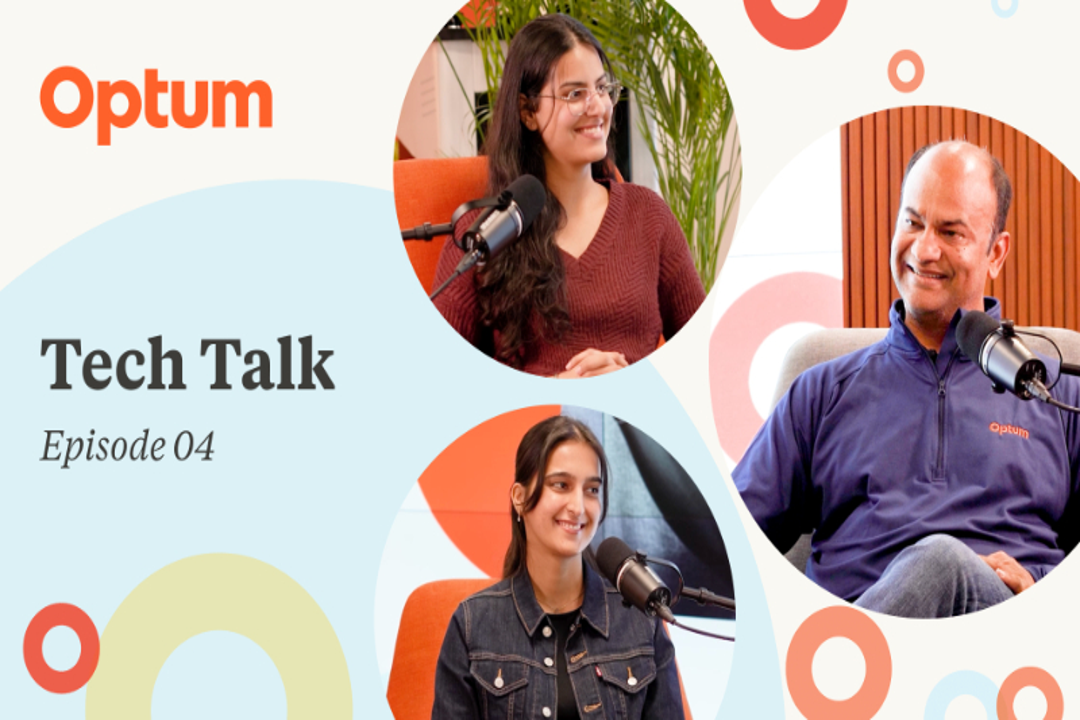
In episode 4, see how AI, cloud and real-time innovation are transforming health care, as Optum India leaders discuss proactive, human-centered care.

Tech Talk: The Future of Health Care Technology

Video

Tech Talk: The future of health care technology

Explore how AI, cloud, ethics and human‑centered skills are shaping health care innovation.

Reimagining Healthcare with AI

Video

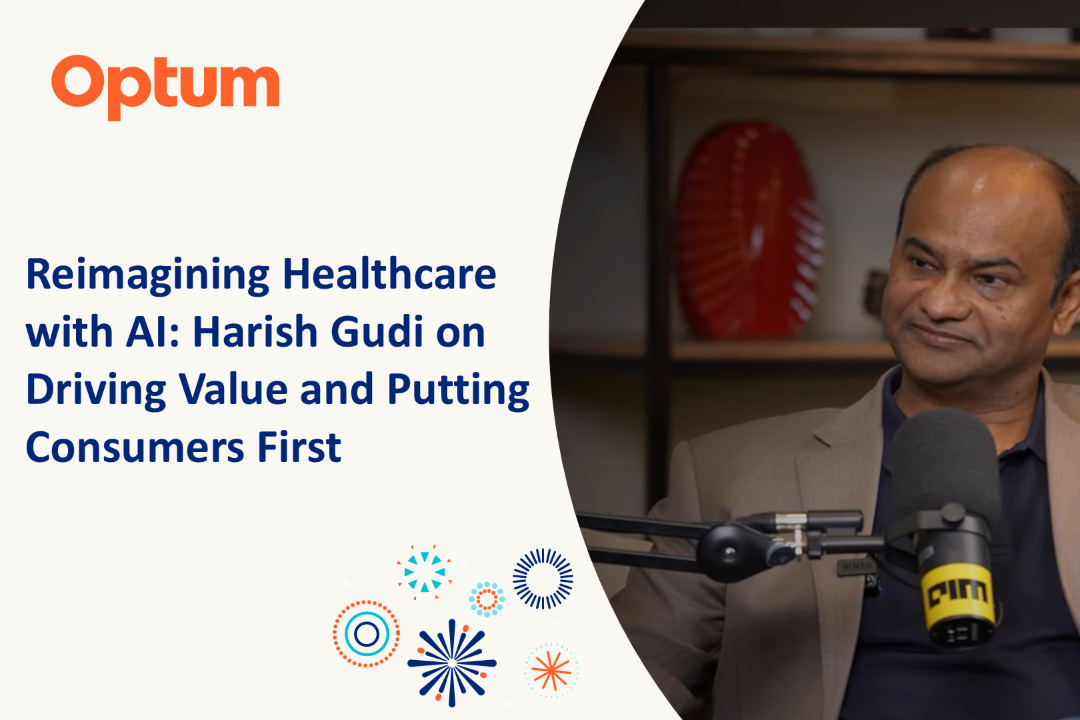
AIM Podcast: Reimagining healthcare with AI

Artificial intelligence with responsibility: Harish Gudi on building a connected, consumer-centric healthcare future at Optum India.